


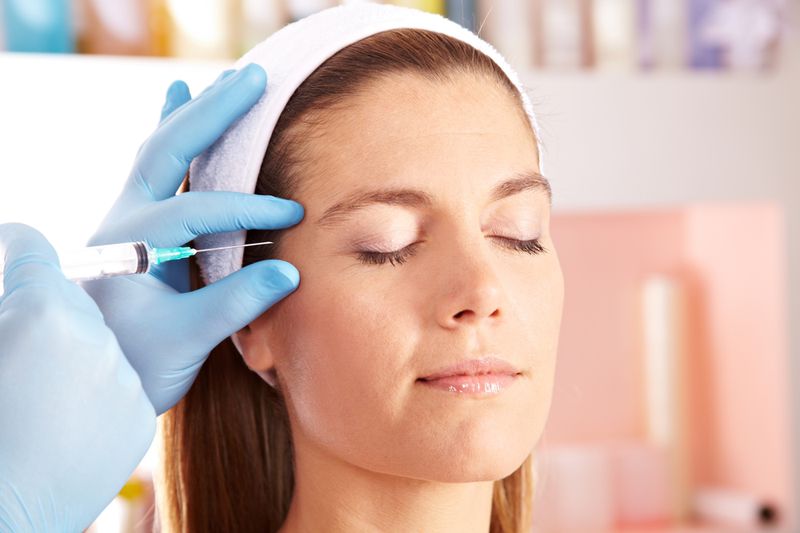
You know that Botox injections eliminate those frown lines that appear between your eyebrows, but did you know it might also improve your mood? Researchers have discovered that Botox treatments may do more than turn back the clock; they may also reduce symptoms of depression. The most recent study offers the most compelling evidence supporting Botox as a possible depression treatment, as the largest randomized trial conducted on the subject thus far.
Clinical Trials: Botox for Depression
The first clinical study, which has now been published in the Journal of Psychiatric Research, was conducted by Dr. Eric Finzi, MD, PhD, and Dr. Norman E. Rosenthal, MD. The researchers studied 74 adult females who had been diagnosed with clinical depression in a randomized controlled trial. Some of those women were given a single treatment of Botox injections, while the control group was given a placebo injection. All of the treatments were done to reduce the appearance of glabellar frown lines between the eyebrows.
Six weeks after the injections, patients were evaluated for their depression symptoms according to the Clinical Global Impression-Severity (CGI-S) scale and the Montgomery-Asberg Depression Rating Scale (MADRS). More than half of the patients given Botox reported significant improvement in their MADRS scores, while only 15 percent of those given saline solution reported improvement. In addition, 27 percent of the Botox patients experienced clinical remission from their depression, according to the MADRS scale.
Improvements were also seen in Botox patients according to CGI-S depression scores. Drs. Rosenthal and Finzi hypothesized the improvement might have been due to the fact the patients were no longer able to make negative facial expressions due to the Botox injections. These findings support earlier theories from Charles Darwin and William James (the facial feedback hypothesis) that suggested facial expressions have a direct impact on mood improvement.
A smaller placebo-controlled trial performed in 2012 showed similar results when studying patients with mild to moderate depression. Swiss researchers discovered that depressive symptoms decreased by nearly half in the group of patients receiving Botox injections. Those in the placebo group only had a 9-percent reduction in symptoms.
Botox Versus Traditional Depression Treatments
Antidepressant medications like selective serotonin reuptake inhibitors (SSRIs) act on neurotransmitters directly within the brain, while Botox’s approach is external and localized. It does not target the biochemical causes of major depressive disorder but aims to break the feedback loop between facial expression and mood. By reducing facial expressions associated with negative emotions, clinical trials hypothesize that Botox can help alleviate depression without the adverse effects of depression medications.
Benefits of Botox to Treat Depression
A meta-analysis of individual patient data from across studies shows that Botox may be indicated as a stand-alone treatment for depression or may be used in conjunction with other depression therapies. Botox may also be an option for patients who do not respond well to traditional depression treatments and medications.
Despite the promising results, researchers at the World Health Organization and other members of global clinical registration studies agree that more work must be done to determine whether Botox injections can really be an effective treatment for depression. For now, the botulinum toxin continues to be the most sought-after anti-aging treatment. Those who receive Botox injections may notice other benefits to the treatments as well.
Botox for Cosmetic Treatments
Botox is mainly known for its use in aesthetic medicine, specifically for its anti-aging benefits. Botox is made with botulinum toxin A, which temporarily relaxes the facial muscles responsible for dynamic wrinkles caused by repeated facial expressions. This is a more direct treatment compared to anti-aging skin care, which delivers ingredients through the skin.
Common areas addressed with Botox include moderate to severe frown lines, crow’s feet around the eyes, bunny lines on the nose, facial lines around the mouth, and horizontal forehead lines. Treatment is quick and painless, aside from the immediate needle prick at the injection sites. Although the antidepressant effects of Botox need more research, patients can expect a boost in mood from the confidence boost they receive with Botox treatments.
Schedule a Consultation
Botox is not a cure for depression, but its impact on mood can help relieve depression symptoms. To learn more about the unique uses of Botox and how you can benefit, schedule a consultation today with board-certified plastic surgeon Dr. Andrews at Dr. Andrews Plastic, Cosmetic & Reconstructive Surgery in Coralville, IA.
